
Thompsons Solicitors is calling for urgent measures to protect firefighters from asbestos exposure, as newly reported figures show that around 100 firefighters have brought claims for asbestos-related diseases since 2016.
The figures — reported by the Daily Mail and drawn from multiple sources, including Thompsons’ own caseload — were published alongside interviews with two former firefighters represented by the firm, both of whom recently settled their claims and chose to share their experiences publicly to raise awareness.
Their accounts reflect only a small proportion of the current and former firefighters the firm has supported.
According to Amanda Jones, Head of Asbestos at Thompsons, the firm is acting for a number of crew members diagnosed with mesothelioma and other asbestos-related conditions after routine call-outs, clean-up operations and training exercises spanning several decades.
Amanda Jones, Head of Asbestos at Thompsons Solicitors, said: “We are continuing to see new cases for firefighters whose exposure to asbestos occurred in stations, in derelict buildings used for training exercises, and while tackling fires in buildings where asbestos was disturbed.
“While the symptoms of illnesses linked to asbestos exposure often take many years to develop, it’s important to stress that this is not a historic problem.
“Asbestos remains present in many buildings, and it is therefore of paramount importance that every precaution is taken when attending fires in buildings where they were constructed before the full ban of asbestos was introduced in 1999.”
Thompsons supports the TUC’s argument that as long as asbestos remains in buildings – even if “managed” – it will continue to pose a threat to workers and occupants. This is of particular importance when you factor in an emergency risk into the setting.
Mike Harding, 74, served more than 30 years in the London Fire Brigade, including time as a fire investigator. He first developed symptoms of mesothelioma in May 2024 while on holiday, experiencing sudden breathlessness. After collapsing fluid was drained from his lungs, further investigations at Guy’s Hospital confirmed he had epithelioid mesothelioma.
Determined to understand how he had been exposed, Mike instructed Thompsons Solicitors.
His legal team, led by Laura Morrison, a principal lawyer who leads the London and South East asbestos team at the firm, traced the exposure to decades of attending fires in commercial, industrial and residential properties across London, many of which contained asbestos-lagged pipes, ceilings, wall panels and roofing.
As a fire investigator, Mike says he routinely sifted through debris without breathing apparatus or even a face mask.
Speaking to the Daily Mail about his illness, he said: “Nobody ever told us to watch out for asbestos because it was dangerous. We simply didn’t know the risks.
“What worries me is that firefighters are still damping down fires and clearing debris without using respirators. I recently saw a senior officer from Essex fire service being interviewed on TV about a big fire, and in the background were two firefighters damping down in the remnants of the blaze.
“Neither was wearing even a mask. I see it all the time, and it worries me. It’s still happening almost 20 years after I retired.”
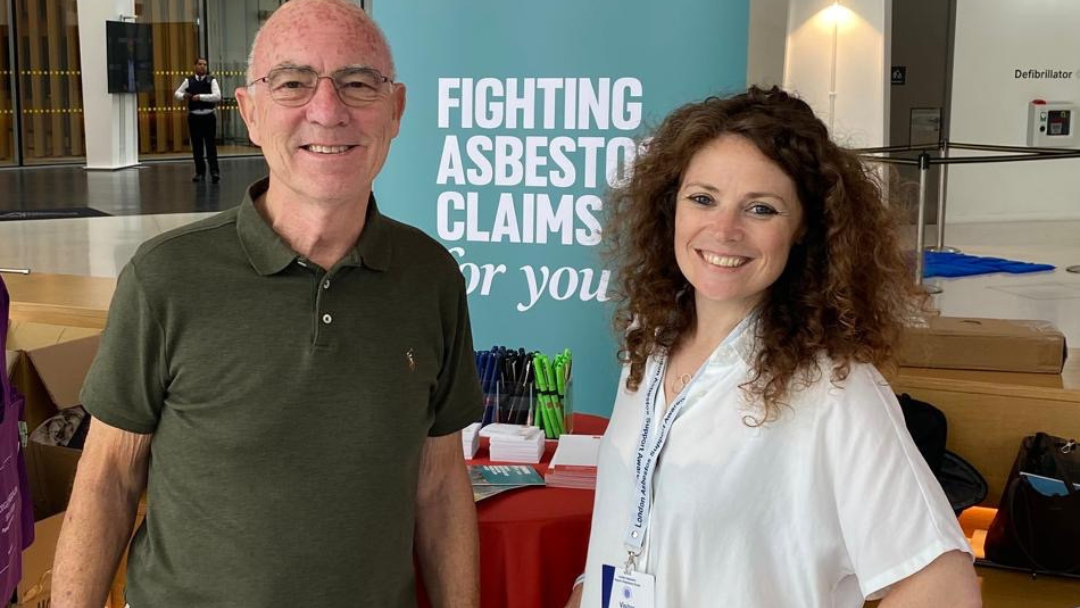
Mike with his lawyer Laura from Thompsons Solicitors
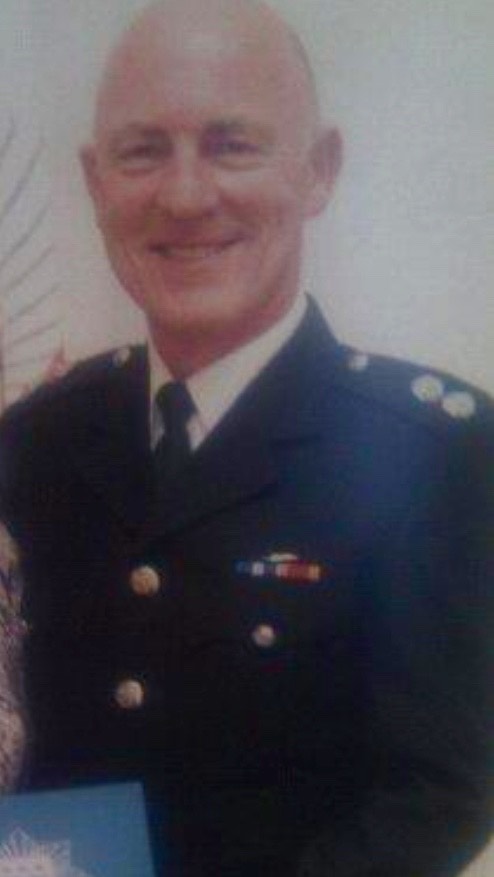
Mike Harding
Thompsons has since secured a settlement from his former employer, including funding for private immunotherapy to support his ongoing treatment, after it admitted that he had been repeatedly exposed to asbestos throughout his career—a risk he could not have reasonably avoided.
In addition to the support he received from Thompsons, Mike was also helped by the London Asbestos Support Awareness Group, which provides specialist advice and practical support to people affected by mesothelioma, other asbestos-related diseases, and silicosis across London and the surrounding counties, including Essex, Kent, Hertfordshire, Buckinghamshire, Surrey, East Sussex, Suffolk, Norwich and Norfolk.
Former Kent firefighter Tony Carlton, now 85, served between 1969 and 1979 at stations in Sittingbourne and Cliffe. He attended barn fires where corrugated asbestos roofing cracked and exploded, creating airborne dust; large commercial blazes including a major fire at Woolworths in Faversham; and numerous house, farm and industrial incidents.
Tony estimates he used breathing apparatus only six times across his 11-year service.
Diagnosed with mesothelioma in 2017 and given just six months to live, Tony said: “I knowingly put my safety in danger when I volunteered for the fire service, but to have unknowingly been exposed to something that has put a ticking clock on my life is unforgivable. Nobody ever warned us about the dangers of asbestos.”
Compensation secured by Thompsons enabled him to access private treatment, allowing him to far outlive his original prognosis.
These are just two of the clients represented by Thompsons’ asbestos team - many supported by the Fire Brigades Union (FBU) - which has successfully settled claims against several fire brigades and local authorities, some with full admissions of breach of duty.
Amanda Jones said: “The cases vary across time and location, but the themes are consistent: a lack of asbestos awareness, inadequate protective equipment and poor management of known risks.
“Mesothelioma is incurable, but through the settlements we secure – both on behalf of clients referred by a union, and those who contact us independently - we can help people access treatments not yet available on the NHS, pay for care and provide financial security for their families.”
Following the release of the figures obtained by the Daily Mail, Thompsons Solicitors is reiterating its support of the TUC’s “Time to Get Rid of It” Campaign, and renewing calls for:
- A central digital asbestos register
- A phased removal plan for every workplace, prioritising the highest-risk sites
- Mandatory asbestos awareness training
- Increased inspections and enforcement by HSE
Amanda Jones added: “Firefighters run towards danger to protect the public. We must do everything possible to raise awareness of asbestos risks and prevent future victims of this silent killer.”